15 Plant Hook Ideas That Will Blow Your Mind
Get ready to transform your home into a lush, green paradise! If you’re looking for clever indoor plant hook ideas, you’ve come to the right place. We’re moving beyond basic ceiling hooks and diving into a world of creative, stylish, and sometimes downright quirky ways to display your beloved plant babies. Suspending your plants not only saves precious floor space but also turns your foliage into living art.
Why Bother with Houseplants? The Science Says It All
It’s not just about looking pretty! Having plants indoors is seriously good for you. Research has consistently shown that greenery can boost your mood, reduce stress, and even make you more productive.
| Study/Publication | Key Finding |
|---|---|
| NASA Clean Air Study | Certain houseplants can naturally remove toxins like benzene and formaldehyde from the air. |
| Journal of Physiological Anthropology | Interaction with indoor plants (like touching and smelling) can reduce psychological and physiological stress. |
| University of Michigan | Having plants in the home is linked to improved memory and attention span by up to 20 percent. |
| Texas A&M University | Workers in environments with plants demonstrate more innovative thinking and produce more ideas. |
Know Your Hooks: A Quick Guide
Before you start drilling, it’s crucial to pick the right hook for the job. The last thing you want is your prized pothos taking a tumble. Always consider the weight of your plant after a thorough watering.
| Hook Type | Typical Weight Capacity | Best For |
|---|---|---|
| Adhesive Hooks | 1-5 lbs (0.5-2.2 kg) | Very small, lightweight plants like air plants or tiny succulents. |
| Cup Hooks (screwed into wood) | 5-10 lbs (2.2-4.5 kg) | Small to medium plants, securing into window frames or shelves. |
| Swag Hooks (into a ceiling stud) | 25-35 lbs (11-16 kg) | Most standard hanging baskets. This is your go-to for secure ceiling hanging. |
| Toggle Bolts/Molly Bolts | 20-50 lbs (9-22 kg) | Heavy-duty option for hanging directly from drywall when a stud isn’t available. |
1. The Classic Ceiling Swag
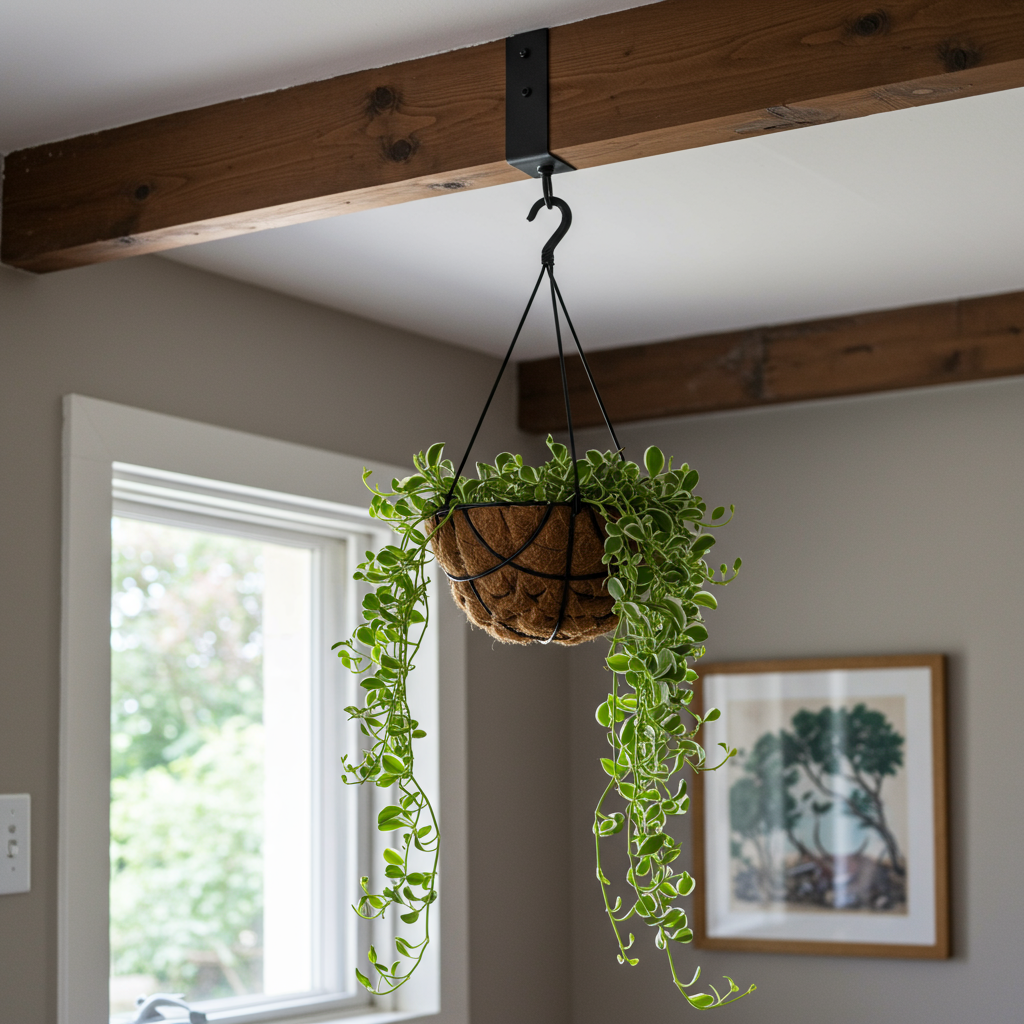
Let’s start with the OG of plant hanging. The simple swag hook, drilled directly into a ceiling joist, is a classic for a reason. It’s sturdy, reliable, and puts your plant front and center.
To find a joist, you can use a stud finder or the good old-fashioned tap test. A solid, deep sound usually means you’ve found a stud, while a hollow sound means you’re just tapping on drywall. For a dramatic effect, hang plants at varying heights to create a cascading canopy.
Pro Tip: Use a clear fishing line instead of a standard rope or macrame hanger for a magical “floating plant” illusion. This looks especially cool in front of a window.
2. The Renter-Friendly Tension Rod
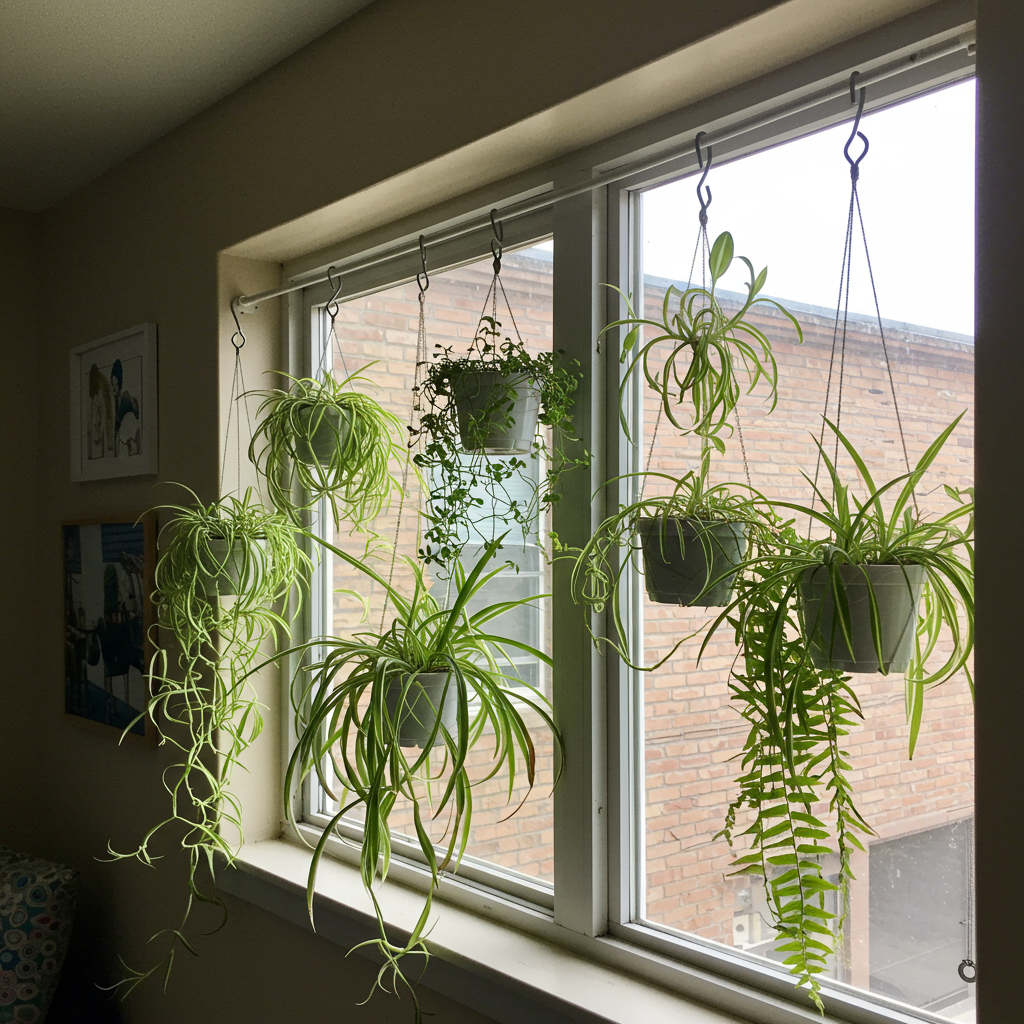
Are you renting? Worried about losing your security deposit over a few holes? The tension rod is your new best friend. You can find heavy-duty ones designed for showers or closets that can hold a surprising amount of weight.
Simply wedge the rod inside a window frame or between two walls. Then, use S-hooks to hang your lightweight plants like string of pearls, spider plants, or small ferns. It’s a zero-damage solution that creates an instant “plant curtain.”
3. The Industrial Pipe Dream
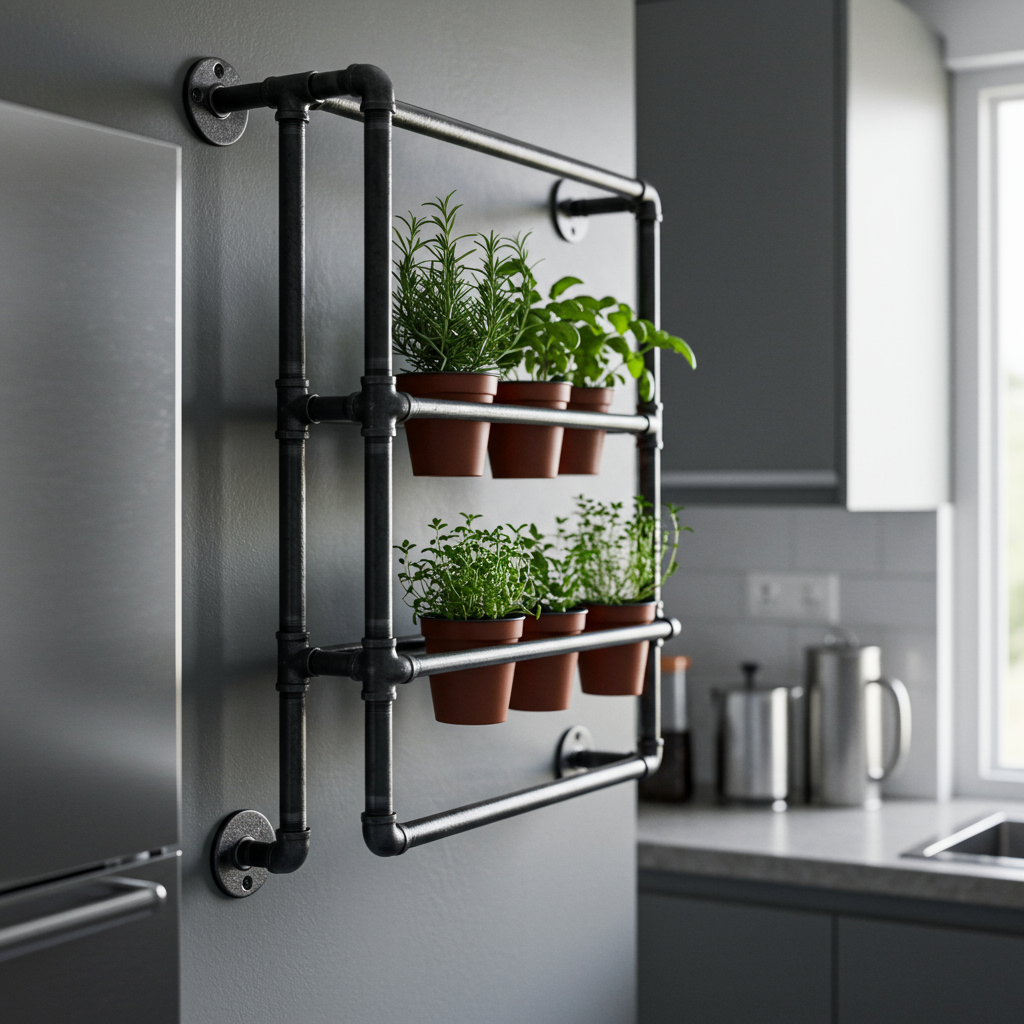
For a modern, industrial, or farmhouse vibe, head to the hardware store. You can construct a simple and incredibly sturdy hanging rack using black iron pipes and fittings. Mount the pipe flange to the wall or ceiling, and you have a robust bar to hang multiple plants from.
This is a fantastic solution for a kitchen window, where you can hang a collection of herbs. The raw, metallic finish of the pipes contrasts beautifully with the soft, organic shapes of the plants.
4. The Repurposed Ladder
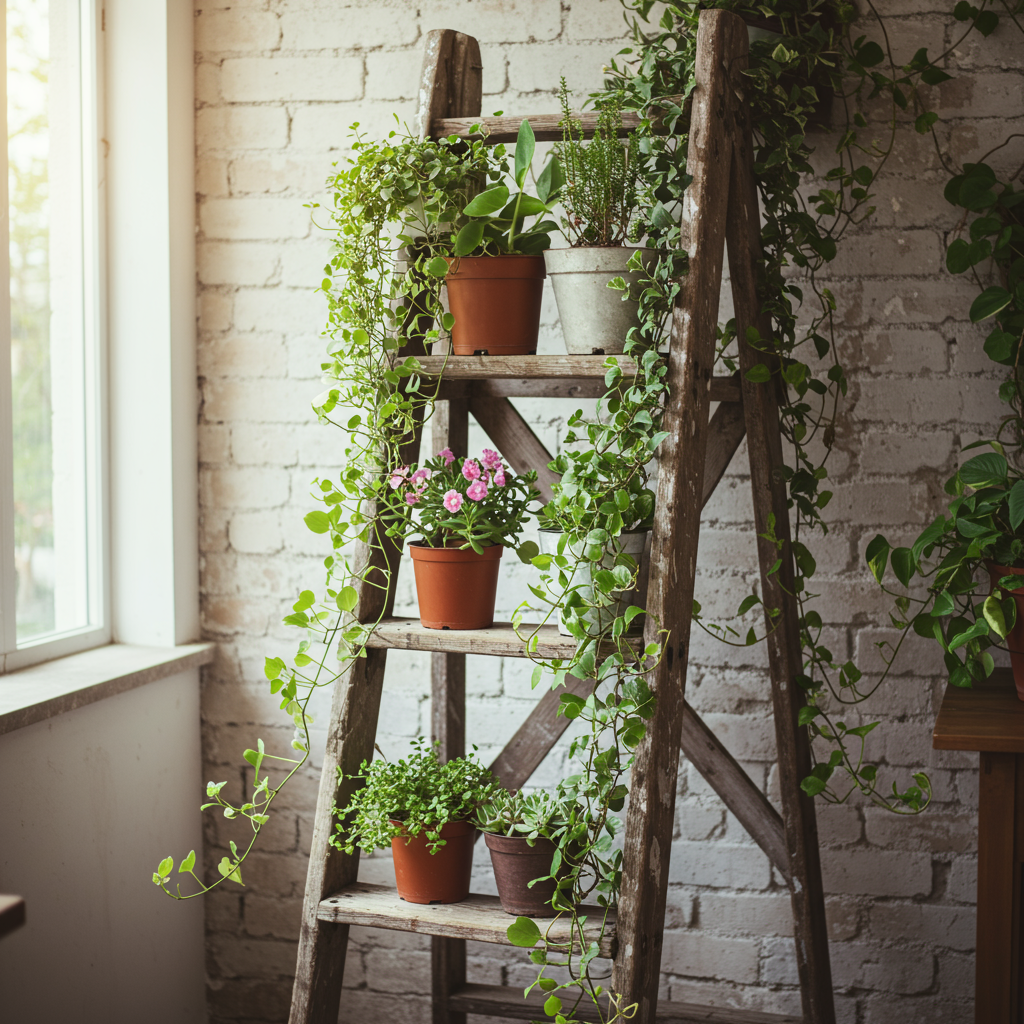
An old wooden ladder, either A-frame or leaning, is a perfect plant stand and hanging station in one. You can place potted plants on the steps and use the rungs to hang trailing plants.
Lean a straight ladder against a wall and secure it at the top. Use S-hooks or simply loop macrame hangers over the rungs. This creates multiple levels of greenery and adds a rustic, charming touch to any corner.
“Creativity is making marvelous out of the discarded.” – Unknown
This quote is perfect for this idea! Don’t throw out that old ladder; give it a new, green life.
5. The Curtain Rod Trick
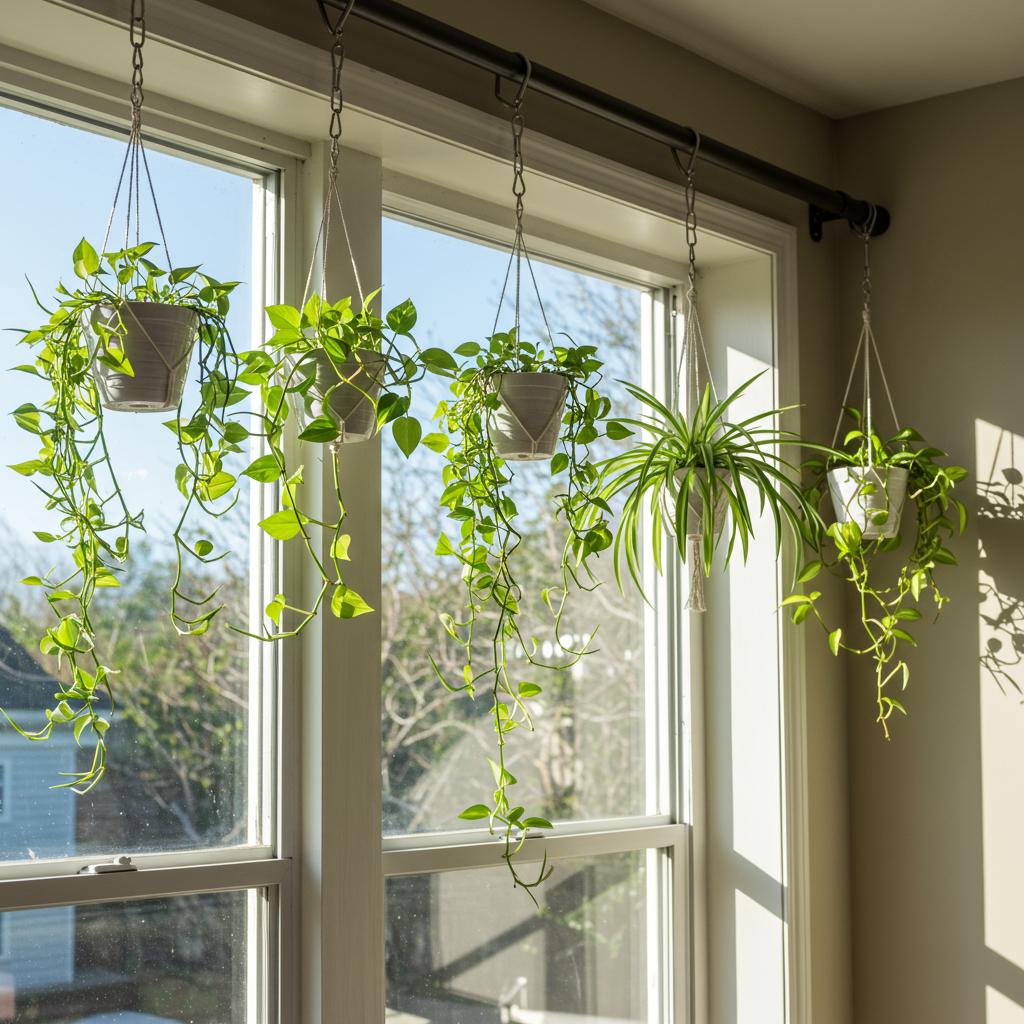
This is one of those “why didn’t I think of that?” ideas. Your existing curtain rod is prime real estate for hanging plants! Most curtain rods are already securely mounted and can easily handle the weight of a few small-to-medium-sized plants.
This works best with lightweight planters and trailing plants that can cascade down the sides of your window. It frames the window in green and ensures your sun-loving plants get all the light they need.
6. The Over-the-Door Valet Hook
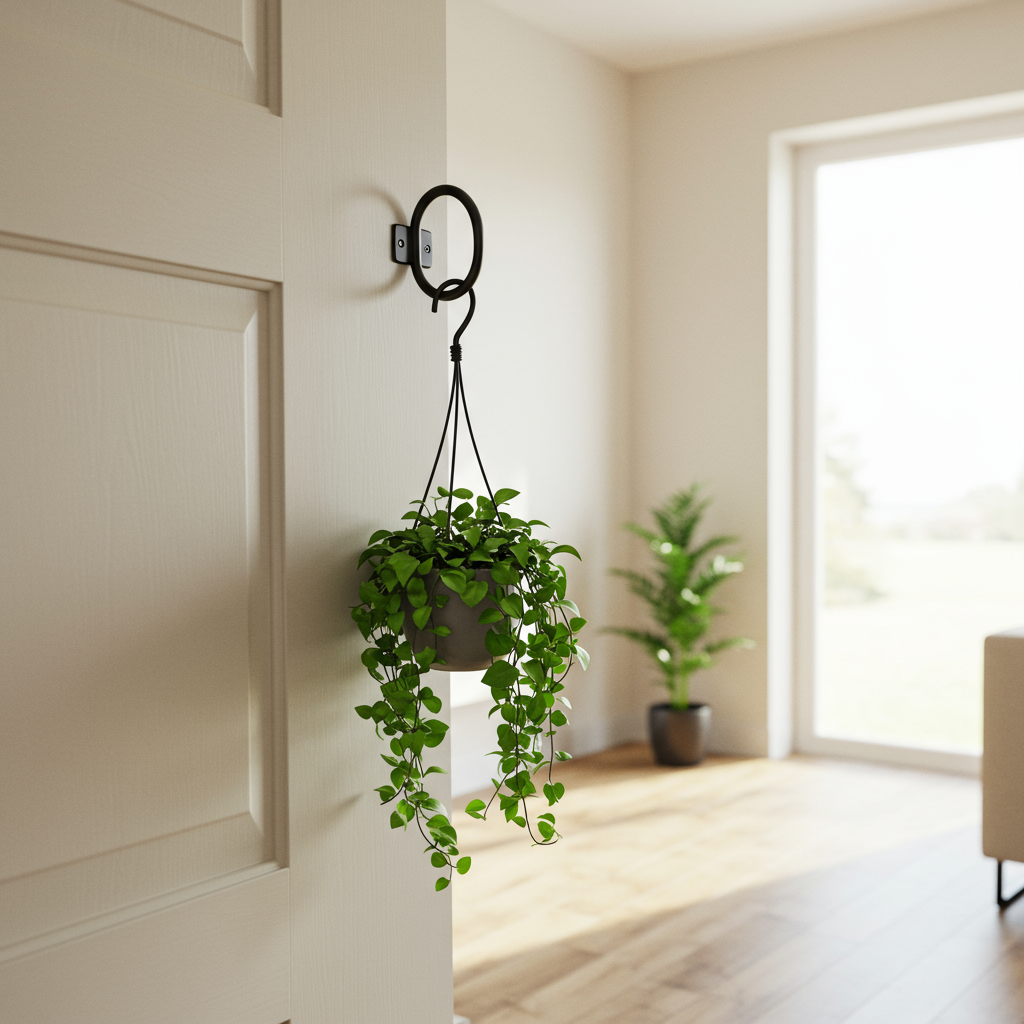
You know those metal or plastic hooks designed to hang over the top of a door for your bathrobe? They’re perfect for plants! You can pop one over any interior door in your home.
This is a great spot for a plant that doesn’t need a ton of direct sunlight, like a snake plant or a ZZ plant. It’s another brilliant, no-drill solution for renters and adds an unexpected touch of nature to places like your home office or bedroom.
7. The Kitchen Rail System
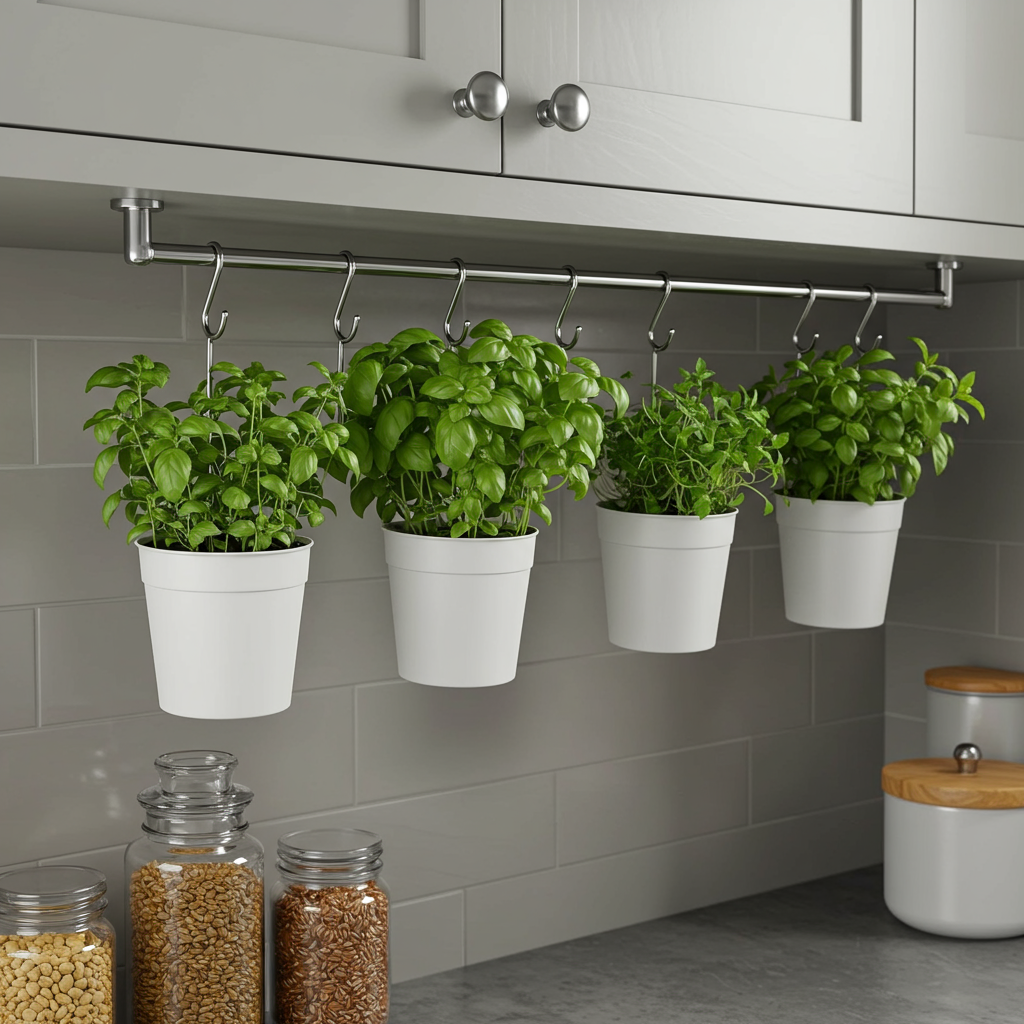
Many kitchens have a rail system mounted under the cabinets for hanging utensils, spices, or mugs. If you have one, you’ve got a built-in plant hanger! Use S-hooks to hang small pots of herbs or other culinary-friendly plants.
Having fresh basil, mint, or parsley right where you cook is a game-changer. Plus, it frees up counter space and brings life to your kitchen.
Pro Tip: Make sure the plants aren’t hanging directly over a heat source like your toaster or stove, as the heat and steam can damage them.
8. The Wall-Mounted Branch
Bring the outdoors in, literally. Find a sturdy, interesting-looking tree branch on your next walk. Clean it up, let it dry completely, and then mount it to the wall using strong brackets.
You now have a beautifully natural and rustic bar from which to hang your plants. This creates a stunning, one-of-a-kind feature wall. It’s perfect for air plants, which can be nestled in the crooks of the branch, or for hanging small terracotta pots with leather cord.
9. The Pegboard Powerhouse
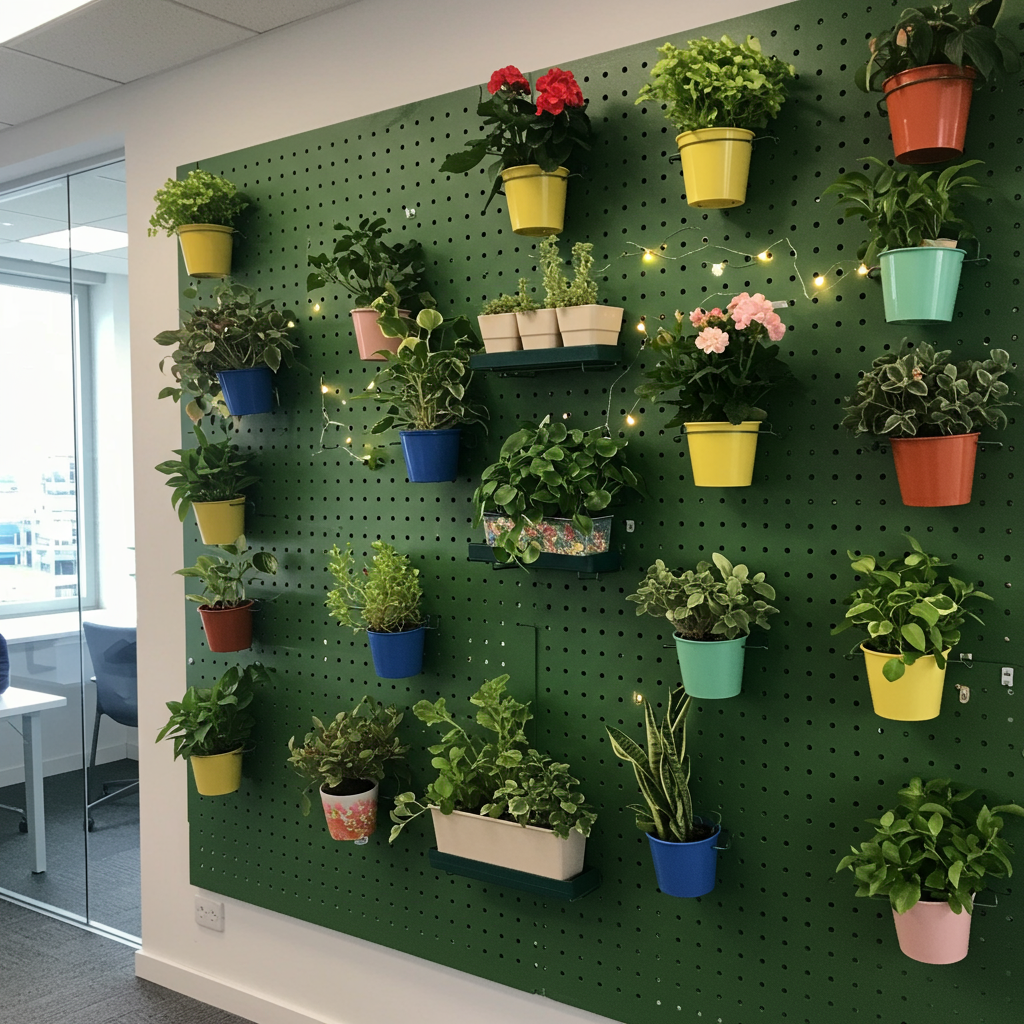
A pegboard isn’t just for organizing tools in the garage. Mount a large pegboard on a wall in your living room or office and use it to create a modular, ever-changing vertical garden.
You can use a variety of pegboard-specific hooks, shelves, and rings to hold your plants. This allows you to easily move your plants around to chase the sun or simply to change up the look. It’s a living, breathing art installation that you control.
10. The Macrame Masterpiece on a Hook
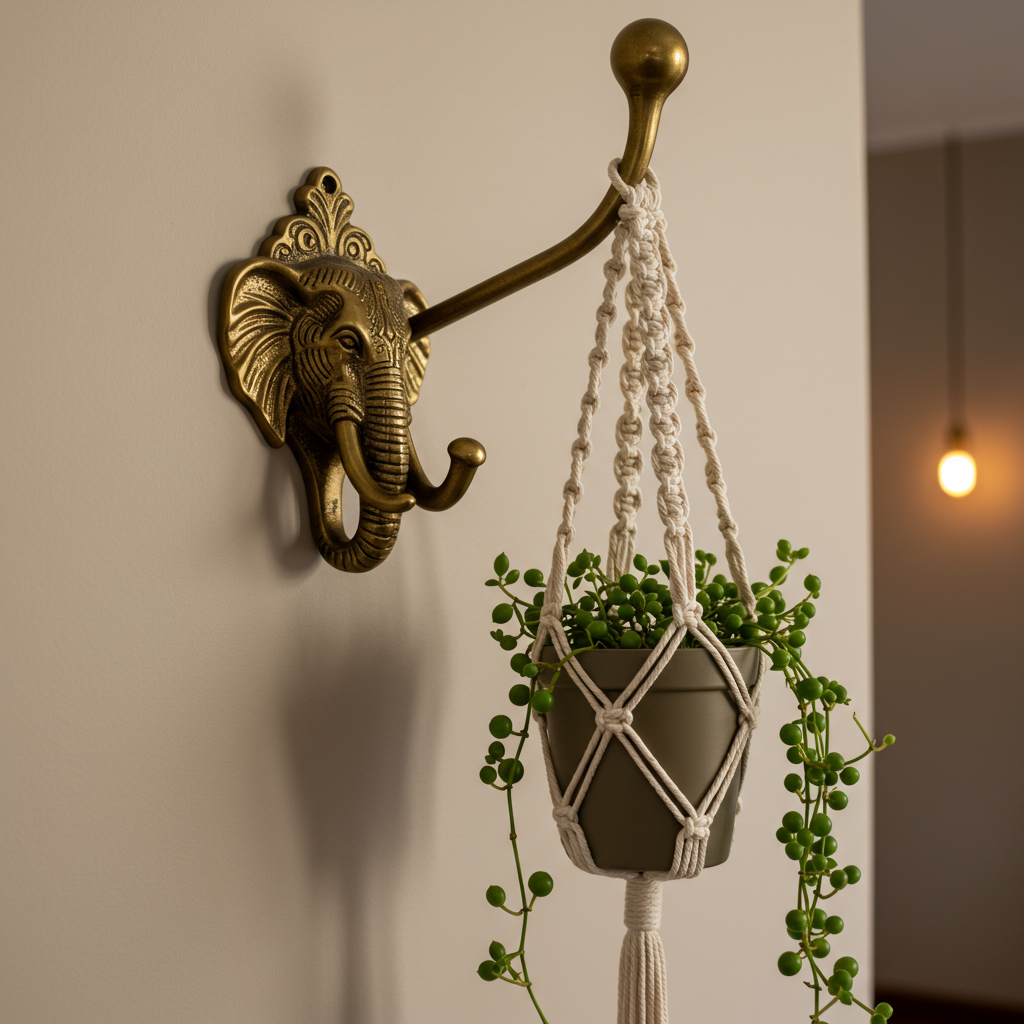
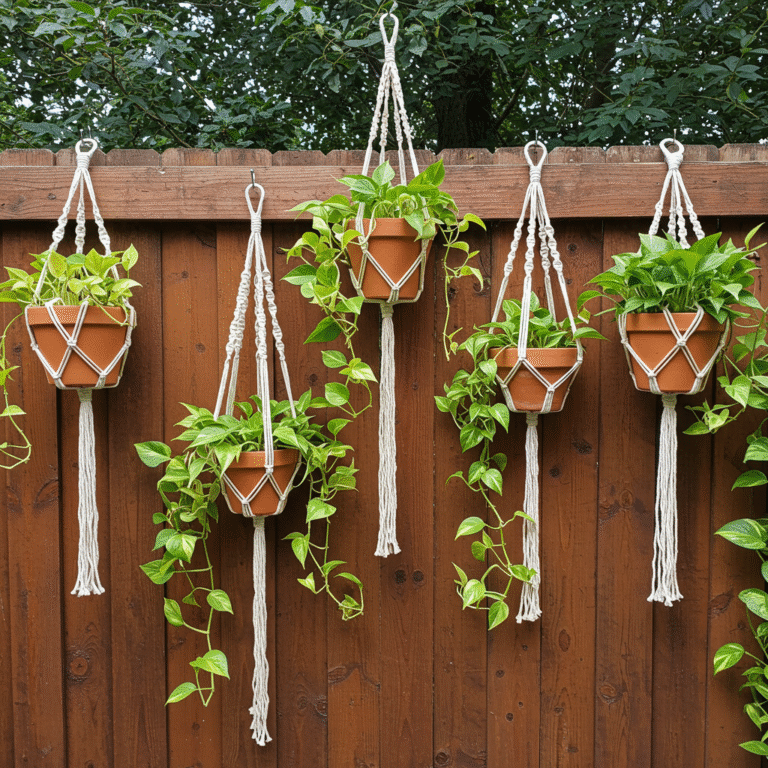
Macrame hangers are beautiful, but they need a hook to hang from. Instead of a plain utility hook, why not make the hook itself part of the decor? Look for decorative wall hooks shaped like animals, hands, or geometric shapes.
A brass elephant hook holding a lush fern or an antique-style ceramic hook showcasing a string of hearts adds an extra layer of style and personality. It shows that you’ve thought about every little detail.
11. The Magnetic Hook Surprise
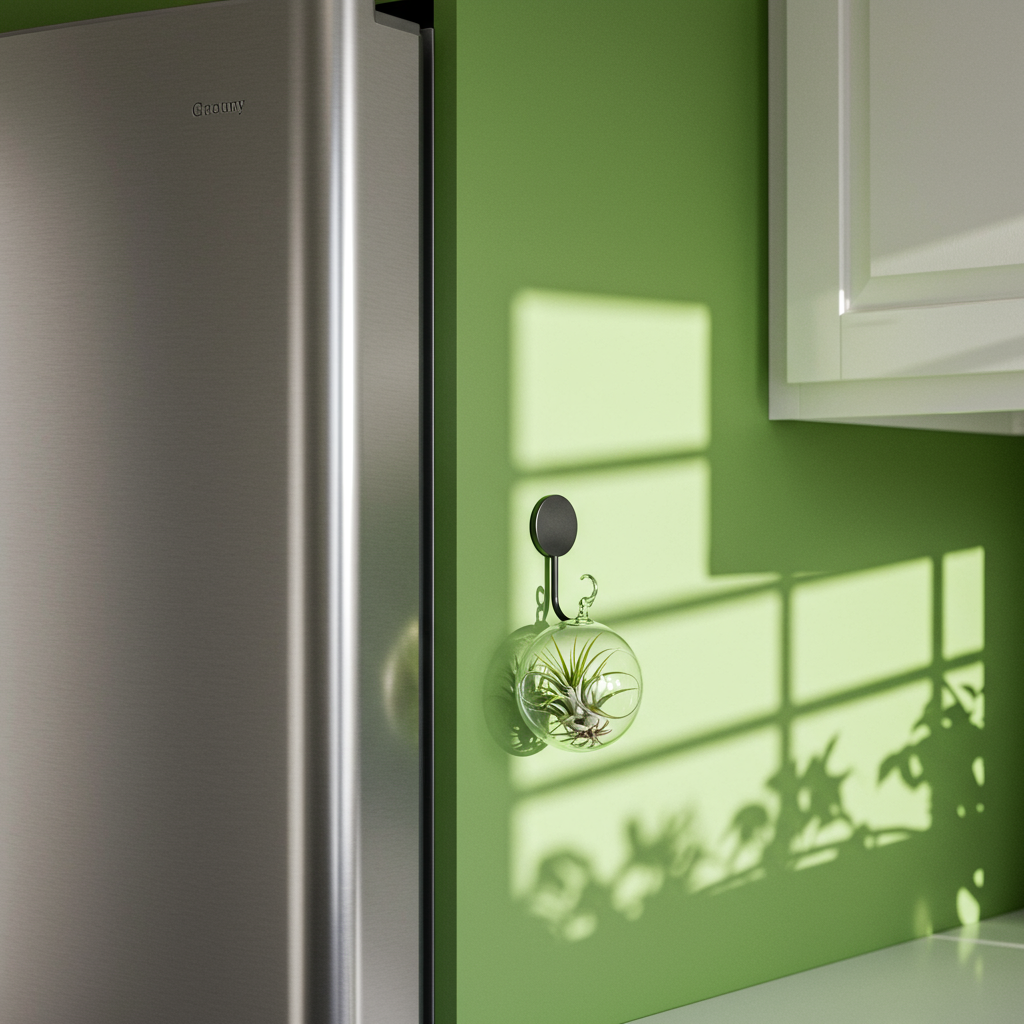
This one is for the unexpected spots. If you have a metal front door, a refrigerator, or a metal filing cabinet, you can use strong magnetic hooks to hang very lightweight plants.
An air plant in a tiny, lightweight holder is perfect for this. It’s a small detail that brings a smile and a bit of green to the most functional parts of your home. Just be sure to check the weight limit on the magnetic hook!
12. The Repurposed Coat Rack
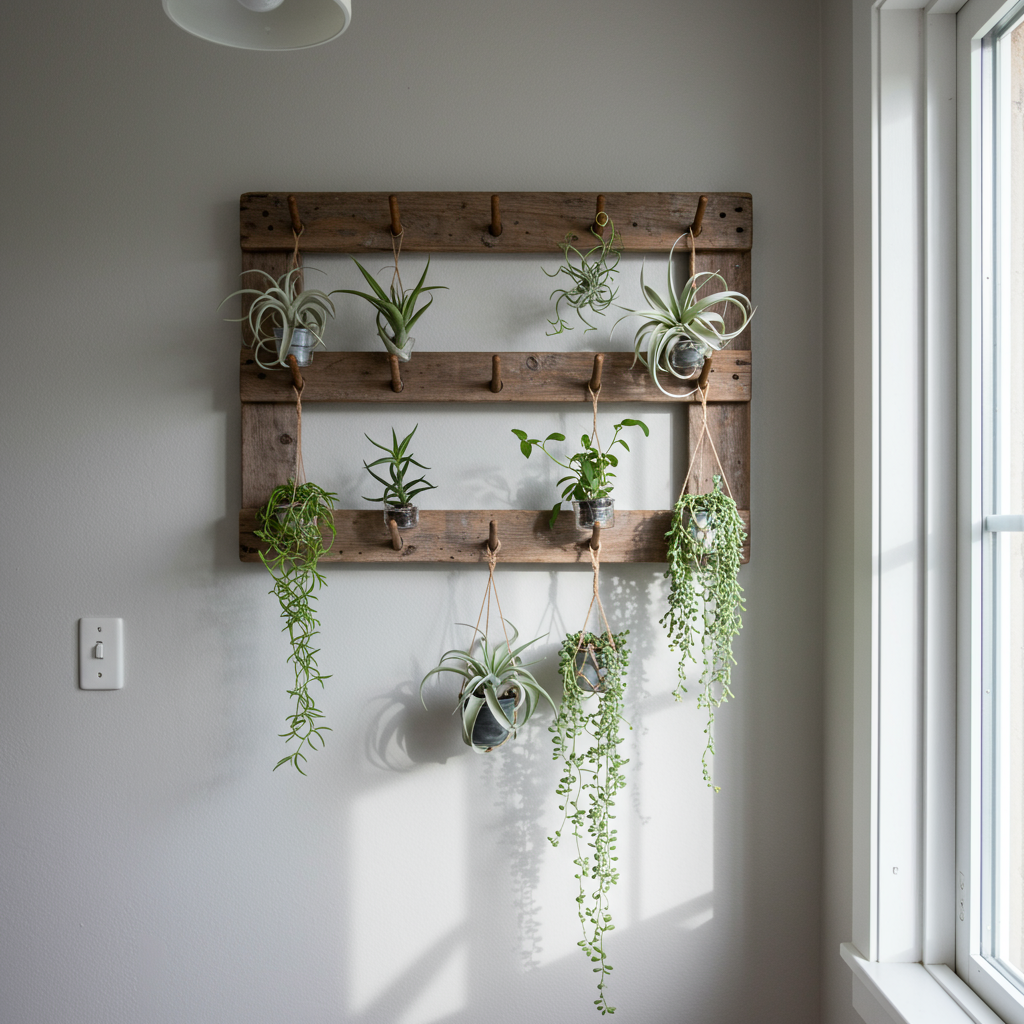
A wall-mounted coat rack with multiple pegs is an instant plant hanging station. You can often find beautiful vintage ones at thrift stores. Simply mount it on the wall and you have several hooks ready to go.
This works wonderfully in an entryway to create a welcoming green space or along a long hallway. You can hang plants, hats, and scarves all in one stylish place.
13. The Under-Shelf Solution
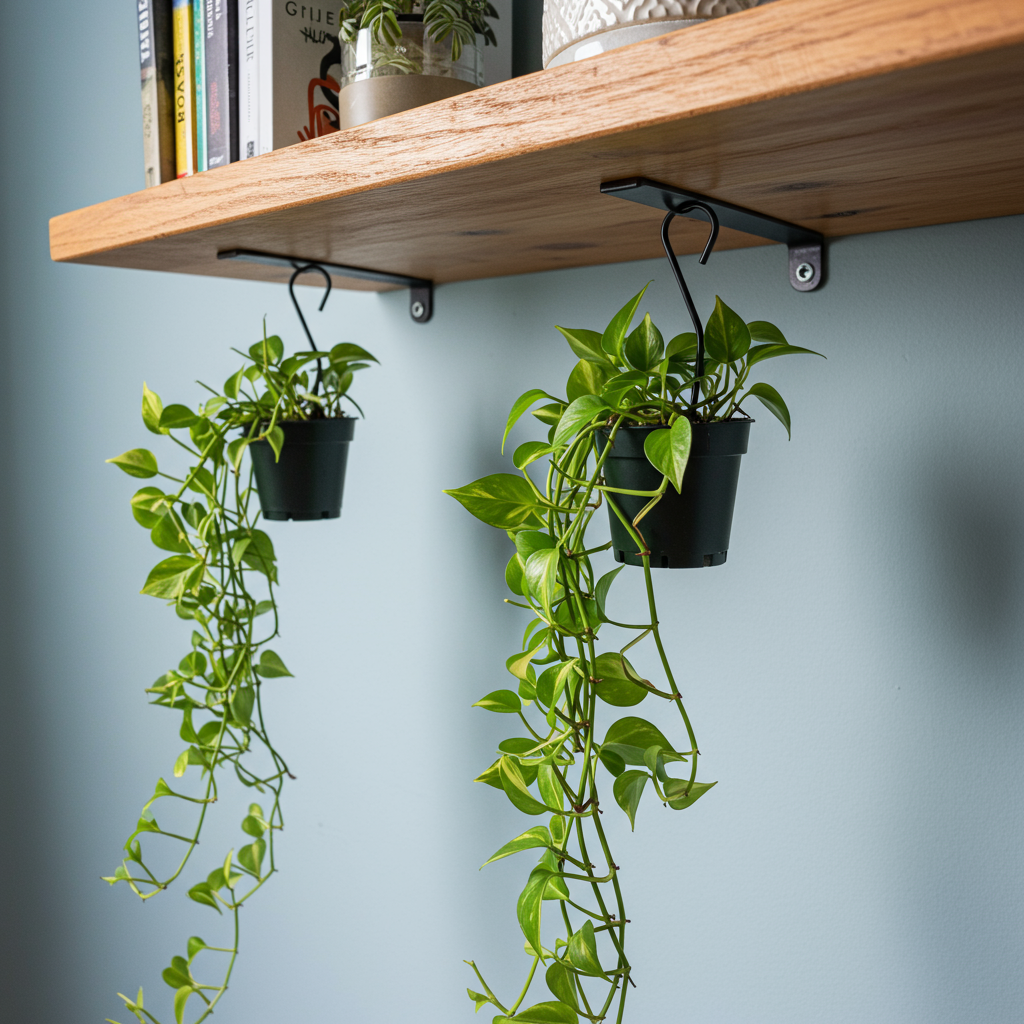
Utilize the dead space underneath your floating shelves or bookshelves. You can install small, simple cup hooks directly into the underside of the wooden shelf.
This is the perfect spot to hang small, trailing plants that won’t get in the way. It creates a lovely layered look, with plants both on top of and hanging below the shelf.
14. The Bicycle Hook Hack
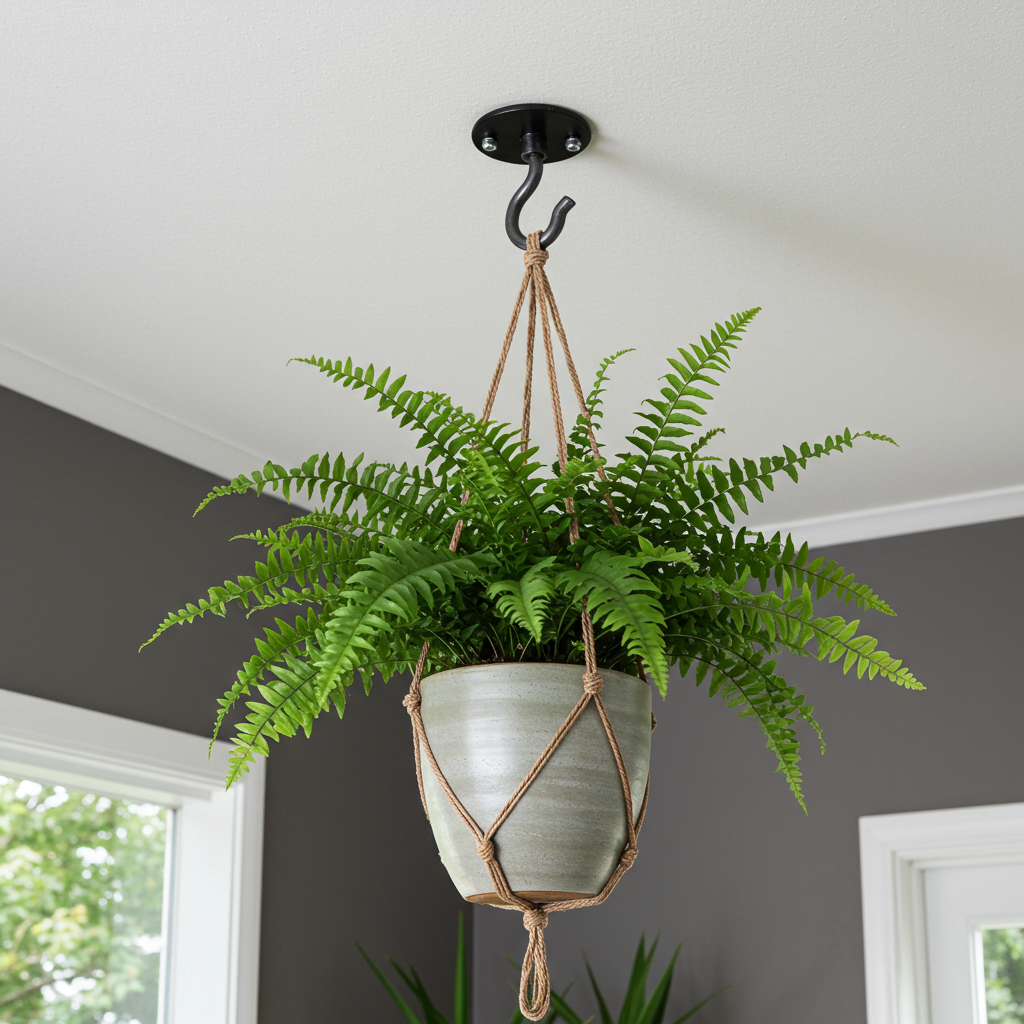
Those vinyl-coated, heavy-duty hooks designed to hang bicycles from the garage ceiling are amazing for your heaviest plants. We’re talking large, mature ferns in heavy ceramic pots.
You’ll need to screw these directly into a ceiling joist, but once they’re in, they are not going anywhere. It’s an industrial-chic look that provides ultimate peace of mind for your biggest botanical buddies.
15. The C-Clamp Creation
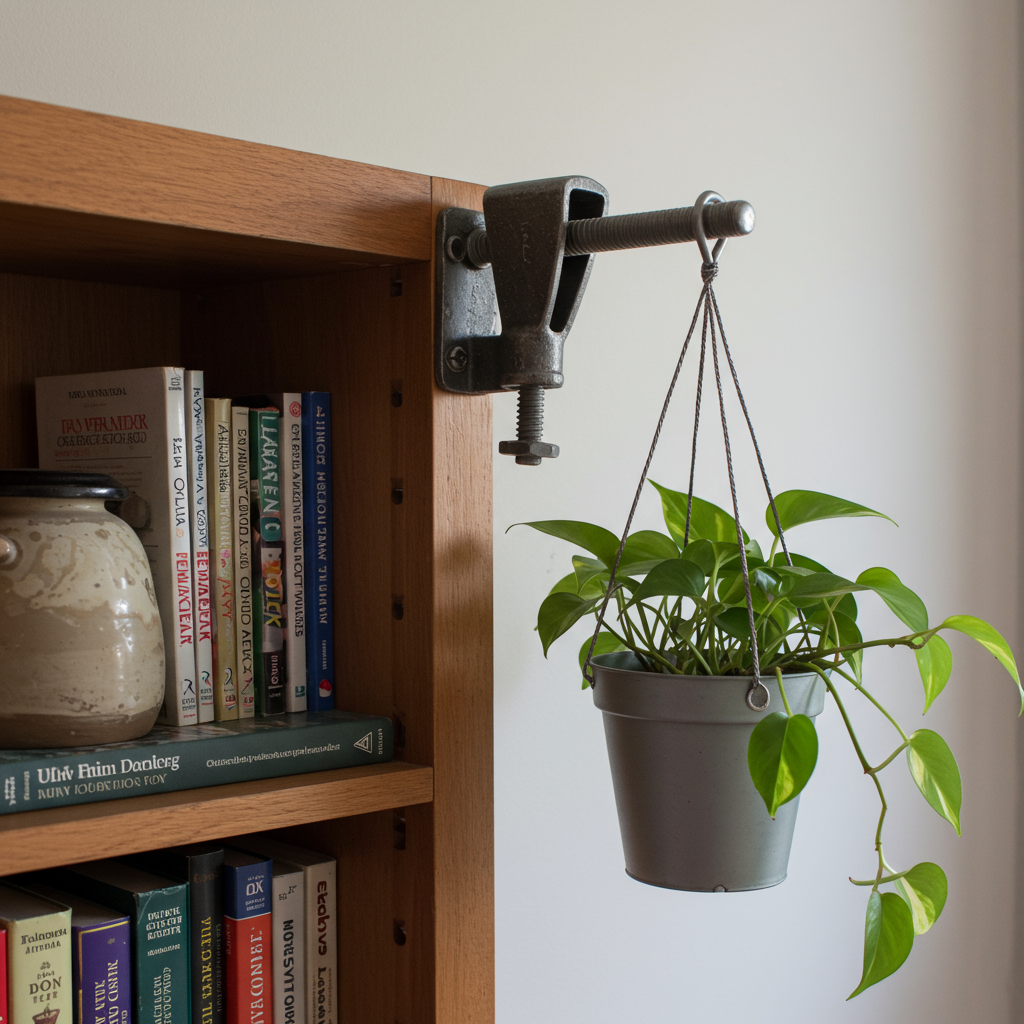
For a truly unique and adjustable solution, use a C-clamp. You can clamp it onto the edge of a sturdy desk, a bookshelf, or a window sill.
Once the clamp is secure, you have a ready-made point to loop your plant hanger through. This is a non-permanent, industrial-style option that you can move around as needed. It’s perfect for a home office or a studio space where flexibility is key.
FAQ: Your Hanging Plant Questions Answered
1. How do I water my hanging plants without making a mess? The easiest way is to take them down! Once a week, take your plants to the sink or shower and give them a thorough watering until it runs out the bottom. Let them drip for a while before hanging them back up. For plants that are too difficult to move, use a watering can with a long, thin spout to water them slowly and precisely. You can also place a drip tray or a second, larger cachepot underneath to catch excess water.
2. What are the best low-maintenance hanging plants for beginners? You can’t go wrong with a Pothos (any variety). They are incredibly forgiving, tolerate a range of light conditions, and will tell you when they’re thirsty with a slight droop. Other great options include Spider Plants, String of Hearts, and Philodendrons.
3. My ceiling is concrete! Can I still hang plants? Yes, but it requires more effort. You will need a hammer drill and a masonry bit to drill into the concrete. Then you’ll use a special concrete anchor or sleeve to secure your hook. If this seems too daunting, it might be best to stick to wall-mounted or tension rod ideas.
4. How do I stop my hanging plant from getting bald on top? Hanging plants can sometimes lose leaves on top because the light source is below them. To fix this, make sure the top of the plant gets some light too! You can also periodically prune the long tendrils. This encourages the plant to branch out and become fuller at the base.
5. How much space should I leave between hanging plants? Give them room to breathe and grow! A good rule of thumb is to imagine the plant at its mature size and make sure it won’t be crowding its neighbors. Good air circulation is key to preventing pests and diseases. For a lush “jungle” look, you can place them closer, but be prepared to prune more often.
Conclusion: Beyond the Hook
As you can see, hanging your indoor plants is an art form with endless possibilities. The key is to look at your space with fresh eyes. A hook isn’t just a piece of hardware; it’s the starting point for a creative display. But perhaps the most overlooked “hook” of all is the plant itself. Before you even think about the hardware, consider the plant’s journey.
How will it grow? Will it trail downwards in a cascade, or will it climb upwards?
By choosing a plant whose natural growth habit complements your chosen spot, you create a dynamic display that evolves over time.
For example, you can install a simple wall hook and then add a clear, self-adhesive wall clip every few feet to guide a Pothos vine around a doorway or window, turning the plant’s own growth into the decor. This method blends the plant and your home together, creating a truly integrated and living piece of art that goes far beyond a simple hanging basket.